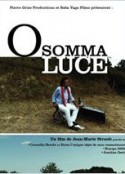
影片详情
O somma luce
转自:http://www.filmlinc.com/nyff/2010/views-from-the-avant-garde-friday-october-1/views-from-the-avant-garde-jean-marie-straub “The end of paradise
- 类型
- 剧情片
- 年份
- 2010
- 地区
- 法国
- 语言
- 其它
- 导演
- 让-马里·斯特劳布
- 主演
- Giorgio Passerone
播放地址
《O somma luce》选集
剧情资料
剧情简介
《O somma luce》讲述的是什么故事?
《O somma luce》 转自:http://www.filmlinc.com/nyff/2010/views-from-the-avant-garde-friday-october-1/views-from-the-avant-garde-jean-marie-straub “The end of paradise on earth.”—Jean-Marie Straub The 33rd verse and last chant of “paradise” in Dante’s Divine Comedy. The film starts with verse 67, “O somma luce…” and continues to the end. “O Somma luce” recalls the first words uttered by Empedocles in Danièle Huillet and Jean-Marie Straub’s 1987 The Death of Empedocles—“O himmlisch Licht!…” (O heavenly light!). This extract from Hölderlin’s text is also inserted into their 1989 film Cézanne. “O somma luce” invokes utopia, or better still “u-topos,” Dante, Holderlin, Cézanne… the camera movement, recalling Sisyphus, in the film’s long shots, suggests its difficulty. In O somma luce, with Giorgio Passerone’s Dante and the verse that concluded the Divine Comedy, we find at the extremity of its possibilities, the almost happy speech of a man who has just left earthly paradise, who tries to fully realize the potential of his nature. Between the two we find the story of the world. The first Jean-Marie Straub film shot in HD. So singular are the textual working methods of Straub-Huillet, and now Straub on his own, that it is hard to grasp how far reaching they are. Direction is a matter of words and speech, not emotions and action. Nothing happens at the edges, everything is at the core and shines from there alone. During the rehearsals we sense a slow process by which ingredients (a text, actors, an intuition) progress towards cohesiveness. It is, forgive the comparison, like the kneading of dough. It is the assembling and working of something until it becomes something else… and, in this case, starts to shine. Actually it’s very simple, it’s just a question of opening up to the light material that has been sealed up. Here, the process of kneading is to bring to life and then reveal. The material that is worked on is speech. So it is speech that becomes visible—nothing else. “Logos” comes to the cinema. The mise en scène of what words exactly? The process of revealing, “phainestai” “phainomenon,” the phenomenon, is what take splace, what becomes visible to the eye. Is “Straubie” Greece? This mise en scène of speech, which goes beyond a close reading of the chosen text, is truly comes from a distant source.—Barbara Ulrich
一、《O somma luce》是哪一年上映的?
《O somma luce》是让-马里·斯特劳布于2010年拍摄的一部经典剧情片。此片开创法国当代剧情片的先河,《O somma luce》上映时票房稳坐前三,创下当年纪录。当时Giorgio Passerone均为最佳主角,Giorgio Passerone以精彩演技和突出形象,奠定在法国影坛地位。Giorgio Passerone饰演角色造型多年后仍为人所模仿。让-马里·斯特劳布之前曾被人怀疑其能力,而《O somma luce》却奠定让-马里·斯特劳布剧情片风格。《O somma luce》首映时曾获海外剧情片和媒体广泛称誉,被认为其优秀程度,是足以与同时期(指2010年代)法国优秀剧情片齐名。
二、被称为剧情片的开先河之作的《O somma luce》,是让-马里·斯特劳布最好的作品吗?
从让-马里·斯特劳布斩获剧情片最佳导演开始,很多观众就觉得这部《O somma luce》是他极具代表性的剧情片。虽然让-马里·斯特劳布后来还拍出过评价很好的作品,但是《O somma luce》依然常被认为是他剧情片创作中的重要代表。
三、《O somma luce》为什么可以成为经典?
提起法国,不少观众都会想到《O somma luce》的名字。这部由让-马里·斯特劳布导演,Giorgio Passerone主演的《O somma luce》,在当时凭借鲜明的人物塑造和紧凑的剧情片叙事获得了不错反响。正是人物命运、情绪推进和故事节奏之间的相互配合,让《O somma luce》在同类型作品中具有较高辨识度,也让观众对其中的情节留下深刻印象。
四、如何评价《O somma luce》?
《O somma luce》口碑表现稳定,深受广大观众喜爱。不仅Giorgio Passerone的表演有看点,而且该剧情片故事情节紧凑,影视8(8.hnttlq.cn)观看起来流畅,同时还能保持较强的剧情吸引力。虽然不同观众对《O somma luce》的评价各有侧重,但该片目前的受欢迎程度已经名列同类作品前茅。
五、《O somma luce》剧情片的主要内容
《O somma luce》是一部剧情片作品,由导演让-马里·斯特劳布执导,Giorgio Passerone主演。影片围绕主要人物的经历展开,通过人物关系、情节推进和情绪变化,呈现出一段具有观看价值的剧情片故事。
《O somma luce》 转自:http://www.filmlinc.com/nyff/2010/views-from-the-avant-garde-friday-october-1/views-from-the-avant-garde-jean-marie-straub “The end of paradise on earth.”—Jean-Marie Straub The 33rd verse and last chant of “paradise” in Dante’s Divine Comedy. The film starts with verse 67, “O somma luce…” and continues to the end. “O Somma luce” recalls the first words uttered by Empedocles in Danièle Huillet and Jean-Marie Straub’s 1987 The Death of Empedocles—“O himmlisch Licht!…” (O heavenly light!). This extract from Hölderlin’s text is also inserted into their 1989 film Cézanne. “O somma luce” invokes utopia, or better still “u-topos,” Dante, Holderlin, Cézanne… the camera movement, recalling Sisyphus, in the film’s long shots, suggests its difficulty. In O somma luce, with Giorgio Passerone’s Dante and the verse that concluded the Divine Comedy, we find at the extremity of its possibilities, the almost happy speech of a man who has just left earthly paradise, who tries to fully realize the potential of his nature. Between the two we find the story of the world. The first Jean-Marie Straub film shot in HD. So singular are the textual working methods of Straub-Huillet, and now Straub on his own, that it is hard to grasp how far reaching they are. Direction is a matter of words and speech, not emotions and action. Nothing happens at the edges, everything is at the core and shines from there alone. During the rehearsals we sense a slow process by which ingredients (a text, actors, an intuition) progress towards cohesiveness. It is, forgive the comparison, like the kneading of dough. It is the assembling and working of something until it becomes something else… and, in this case, starts to shine. Actually it’s very simple, it’s just a question of opening up to the light material that has been sealed up. Here, the process of kneading is to bring to life and then reveal. The material that is worked on is speech. So it is speech that becomes visible—nothing else. “Logos” comes to the cinema. The mise en scène of what words exactly? The process of revealing, “phainestai” “phainomenon,” the phenomenon, is what take splace, what becomes visible to the eye. Is “Straubie” Greece? This mise en scène of speech, which goes beyond a close reading of the chosen text, is truly comes from a distant source.—Barbara Ulrich